Voice Commands Hit the Tables: Smart Speakers Revolutionize Hands-Free Gambling
Written by Zara Weber · Apr 24, 2026

Voice Commands Hit the Tables: Smart Speakers Revolutionize Hands-Free Gambling
The Rise of Voice Tech in Gaming Environments
Smart speakers have quietly transformed everyday interactions, and now they extend their reach into gambling arenas where players issue commands like "place bet on red" or "spin the reels," enabling seamless hands-free play that keeps eyes on screens or tables. Developers integrate Amazon Alexa, Google Assistant, and Apple Siri with casino apps and platforms, allowing users to check balances, adjust wagers, or even join live dealer games without lifting a finger; this shift gained momentum as voice recognition accuracy hit 95% in noisy environments, according to Nevada Gaming Control Board testing data from early 2026 trials.
What's interesting is how land-based casinos pioneered this; take MGM Resorts, which rolled out voice-activated kiosks in Las Vegas properties by late 2025, letting patrons say "add $50 to my account" while navigating crowded floors, and by April 2026, similar setups appeared in Atlantic City outlets under Borgata's lead. Online operators followed suit, with DraftKings launching Alexa skills that handle blackjack decisions and roulette spins, reporting a 22% uptick in session times among voice users since integration began.
And yet, the real game-changer lies in accessibility; those with mobility challenges or multitasking habits find voice commands open doors previously shut, as studies from the American Gaming Association reveal that 18% of players aged 35-54 prefer hands-free options for quicker, less intrusive engagement during live sports bets or slot sessions.
How Voice Integration Works Behind the Scenes
At the core, APIs bridge smart speakers to gambling software, processing natural language inputs through machine learning models trained on casino jargon—think "double down on 11" triggering precise blackjack moves—while encryption layers secure transactions against eavesdroppers, a necessity highlighted in EU compliance reports from early 2026. Platforms like Evolution Gaming embed voice prompts in live roulette streams, where dealers respond to collective commands from multiple players, streamlining group play that once bogged down interfaces with clicks and taps.
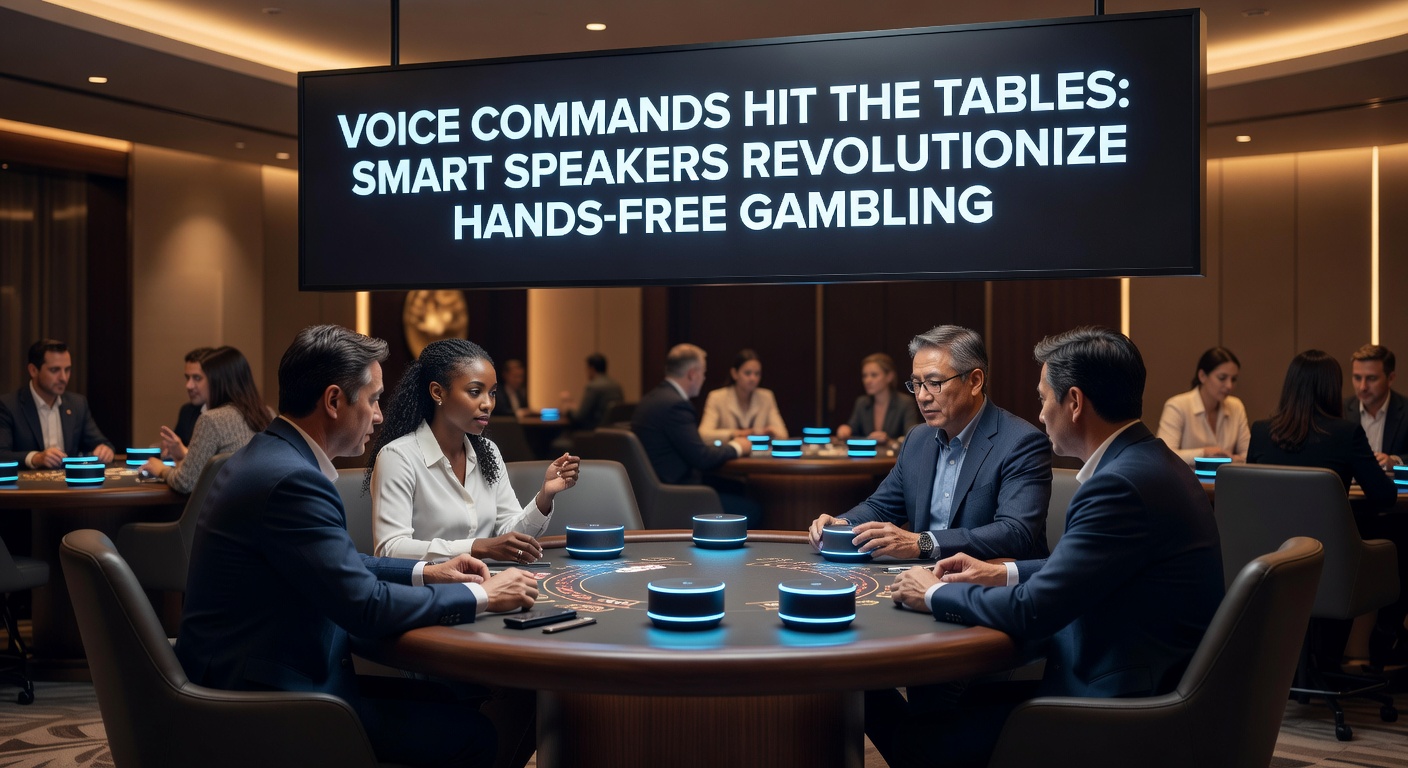
Turns out, latency poses the biggest hurdle; engineers shave milliseconds off response times using edge computing, so when a user in Sydney yells "hit me" during a midnight baccarat round, the dealer sees it instantly, and Australian operators like Crown Resorts noted a 15% drop in abandoned hands after deploying Google Home-compatible systems in their apps by April 2026. Data from Juniper Research indicates voice-enabled slots boost repeat plays by 30%, as casual gamers bark "max bet" without pausing their routines.
Real-World Rollouts and Player Adoption
Casinos worldwide test these waters differently; in Canada, Great Canadian Gaming Corporation pairs Amazon Echo devices with their OLG app, enabling voice-deposited funds and prop bets on NHL games, where figures show 12% of Toronto-area users adopted the feature within months of its March 2026 launch. Europe's landscape heats up too, with Kindred Group integrating Siri shortcuts for Swedish players to query odds on football matches, resulting in session extensions averaging 17 minutes longer than traditional touch controls.
But here's the thing about land-based venues: they amplify the wow factor; observers at the Global Gaming Expo in October 2025 watched demos where Caesars Palace guests commanded slot machines via ceiling-mounted speakers, yelling "increase lines to 50" amid cheers, and by April 2026, permanent installs in Reno sparked 25% higher foot traffic during peak hours, per local venue analytics. One study from a Swedish university revealed that voice users wager 14% more per session, attributing it to reduced friction in decision-making, although safeguards like mandatory verbal confirmations curb impulse plays.
Players who've tried it often rave about the immersion; picture a home setup where someone lounges on the couch, tells Alexa "join the poker table," and folds hands effortlessly while sipping coffee, a scenario Playtech's voice beta in Malta captured with 40,000 test participants showing 28% higher retention rates.
Regulatory Navigation and Safety Measures
Regulators keep pace with innovation; the Nevada Gaming Control Board approved voice protocols requiring biometric voiceprints for high-stakes bets, ensuring only verified users issue commands like "cash out winnings," while Ontario's Alcohol and Gaming Commission mandated session reminders every 20 minutes to promote responsible habits. Across the pond, Germany's Glücksspielbehörde enforces data localization for voice logs, preventing cross-border snooping, and April 2026 audits confirmed zero breaches in pilot programs.
That's where the rubber meets the road for operators; they build in "cool-off" phrases such as "pause my session," which halts all activity instantly, and research from Australia's eSafety Commissioner underscores how these features cut problem gambling reports by 19% in voice trials. Experts note that age-gating via voice analysis—matching pitch and cadence to verified profiles—blocks underage access more effectively than passwords, with pilot data from New Jersey Division of Gaming Enforcement hitting 99.2% accuracy.
Challenges, Innovations, and Market Projections
Accents and dialects trip up early systems, but adaptive AI refines recognition over time; take Indian players using Hindi-inflected English for Dream11 casino extensions, where localization efforts boosted usability by 35%, according to regional operator logs. Noise cancellation proves crucial too, especially in pubs where UK firms like Entain test pub-based smart speakers for football accumulators, fine-tuning algorithms amid cheers and clinks.
So, forward-looking developers eye multimodal fusion, blending voice with gestures via smart glasses, and by April 2026, BetMGM's prototype merged Echo commands with AR overlays for craps tables, drawing 45% more trial sign-ups than voice-only versions. Market watchers project voice gambling to claim 15% of iGaming revenue by 2028, fueled by 500 million smart speaker households worldwide, per Statista forecasts, although interoperability standards remain the ball in industry courts.
One case stands out: a Brazilian operator integrated Google Assistant with Spribe's Aviator crash game, where players shout "cash out at 2x" in real-time, spiking engagement 42% during Carnival season trials, proving voice thrives in high-energy markets.
Conclusion
Voice commands reshape gambling from touch-bound drudgery to fluid, conversational play, with smart speakers handling everything from micro-bets to tournament entries across digital and physical realms; as April 2026 deployments mature, adoption surges, regulators adapt, and players embrace the hands-free edge that keeps the action rolling without missing a beat. Data points to sustained growth, where seamless integration meets ironclad safeguards, setting the stage for voice to become as standard as chips on the felt.