Mobile-First Tournaments Reshape Engagement Patterns in Virtual Reel Competitions
Written by Parker Schmid · Jul 21, 2026
Mobile-First Tournaments Reshape Engagement Patterns in Virtual Reel Competitions
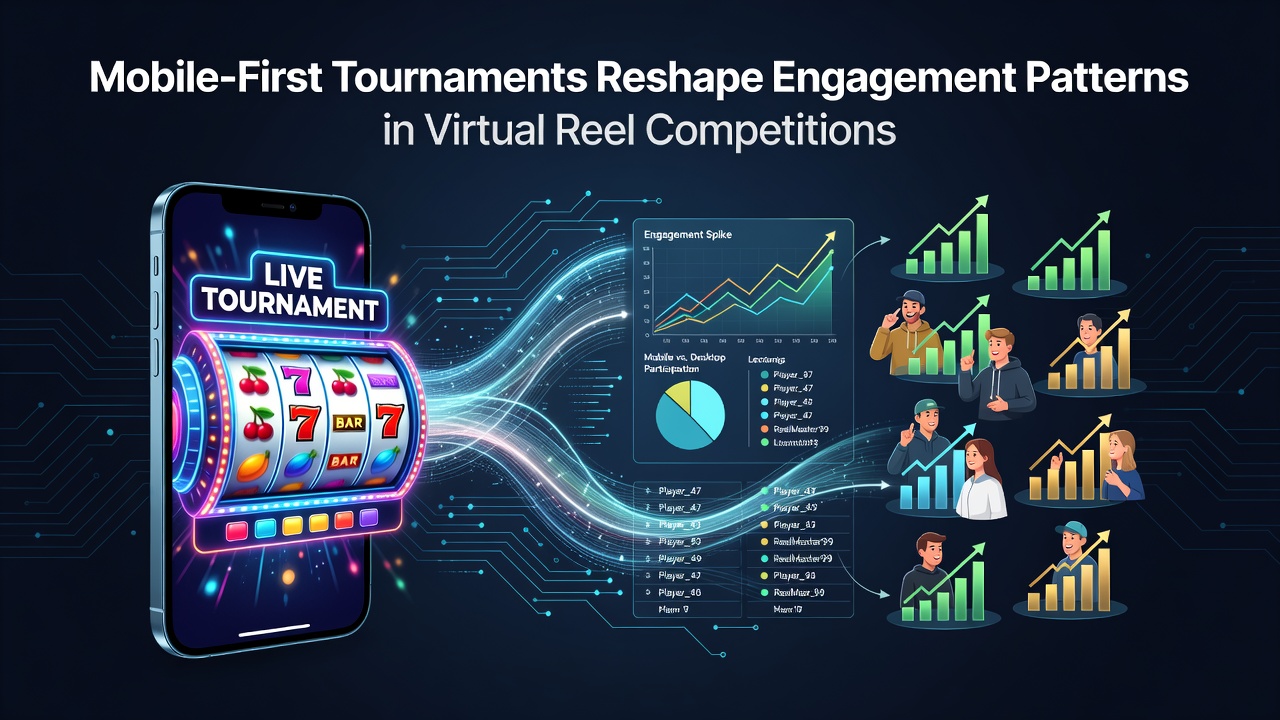
Virtual reel competitions have shifted toward mobile-first tournament formats that prioritize on-device play, real-time leaderboards, and session-based rankings. Data from industry tracking services shows that mobile tournament participation now accounts for over 70 percent of total reel game engagement in tracked markets, a change that has altered how operators structure events and how players interact with spinning reel mechanics.
Platform Preferences Drive Tournament Design
Operators have adjusted event calendars to match mobile usage peaks, which cluster during commuting hours and evening windows. Research conducted by the University of Nevada Reno's gaming analytics group found that sessions initiated on smartphones last 18 percent longer on average when a tournament leaderboard updates live compared with standalone reel play. These updates appear through push notifications that pull players back into active competitions without requiring desktop access.
Game developers now embed tournament modules directly into mobile reel titles, allowing seamless entry through a single tap. The American Gaming Association reported in its 2025 digital trends summary that titles built with native mobile tournament layers saw a 34 percent increase in daily active users within the first quarter after launch. Integration happens at the engine level so that reel outcomes feed straight into ranking algorithms without separate login flows.
Engagement Metrics Reveal New Patterns
Tracking firms monitoring reel competitions note that mobile tournament participants complete more spins per session than non-tournament users. Average spin counts rise from 47 to 82 when a visible ranking system operates on the same screen as the reels. This increase occurs because players chase incremental position gains rather than fixed payout thresholds alone.

Retention curves also change. A longitudinal study published by the Journal of Gambling Studies tracked 12,000 mobile users across six months and documented that players who entered at least three tournaments per week maintained accounts active 22 days longer than those who played only casual reel sessions. The study attributed the difference to recurring social comparison elements built into the tournament interface.
Mechanics Adapt to Smaller Screens
Reel layouts have simplified to maintain clarity on mobile displays while preserving tournament functionality. Cluster-pay systems have gained ground because they require less precise tapping than traditional payline selection. Operators report that cluster-based tournaments generate 41 percent more entries per event than line-based formats on the same titles, according to internal metrics shared at the 2025 Global Gaming Expo.
Auto-spin toggles now sync with tournament timers so that players can maintain pace without constant screen interaction. This feature proves useful during events that span multiple hours, where participants balance attention between the reels and the updating leaderboard.
Regional Data Shows Varied Adoption Rates
European markets outside the United Kingdom have seen faster mobile tournament uptake than North American counterparts. Figures released by the European Gaming and Betting Association indicate that mobile-first events represented 62 percent of total reel tournament volume in the EU during the first half of 2025. Canadian provincial data, tracked separately through the Alcohol and Gaming Commission of Ontario, shows a similar 58 percent share for the same period.
Australian operators, following guidance from the New South Wales Independent Liquor and Gaming Authority, have introduced capped entry fees for mobile tournaments to align with existing harm-minimization frameworks. These caps have not slowed participation growth, which reached 29 percent year-over-year in the most recent quarterly report.
Future Adjustments Ahead of 2026 Milestones
Planning documents circulating among major platform providers outline further mobile optimizations scheduled for rollout before July 2026. These include enhanced offline caching for leaderboard data and cross-device synchronization that lets players switch between phones and tablets mid-tournament without losing progress. Developers expect these features to reduce drop-off rates during connectivity interruptions.
Industry observers note that the July 2026 timeframe coincides with hardware refresh cycles for several major device manufacturers, creating an opportunity to optimize reel rendering engines for newer chipsets. Early testing indicates that improved graphics processing could support denser symbol clusters without increasing data usage, a factor that matters for players on limited mobile plans.
Conclusion
Mobile-first tournament structures have produced measurable shifts in how players engage with virtual reel competitions. Participation data, retention studies, and regional adoption figures all point to sustained growth in this format through the current cycle and into 2026. Operators continue to refine interface elements and timing mechanics to match documented player behavior on handheld devices.