Adaptive Interfaces Transform Bonus Triggers and Live Table Dynamics in Digital Gambling Platforms
Written by Parker Schmid · Jul 3, 2026
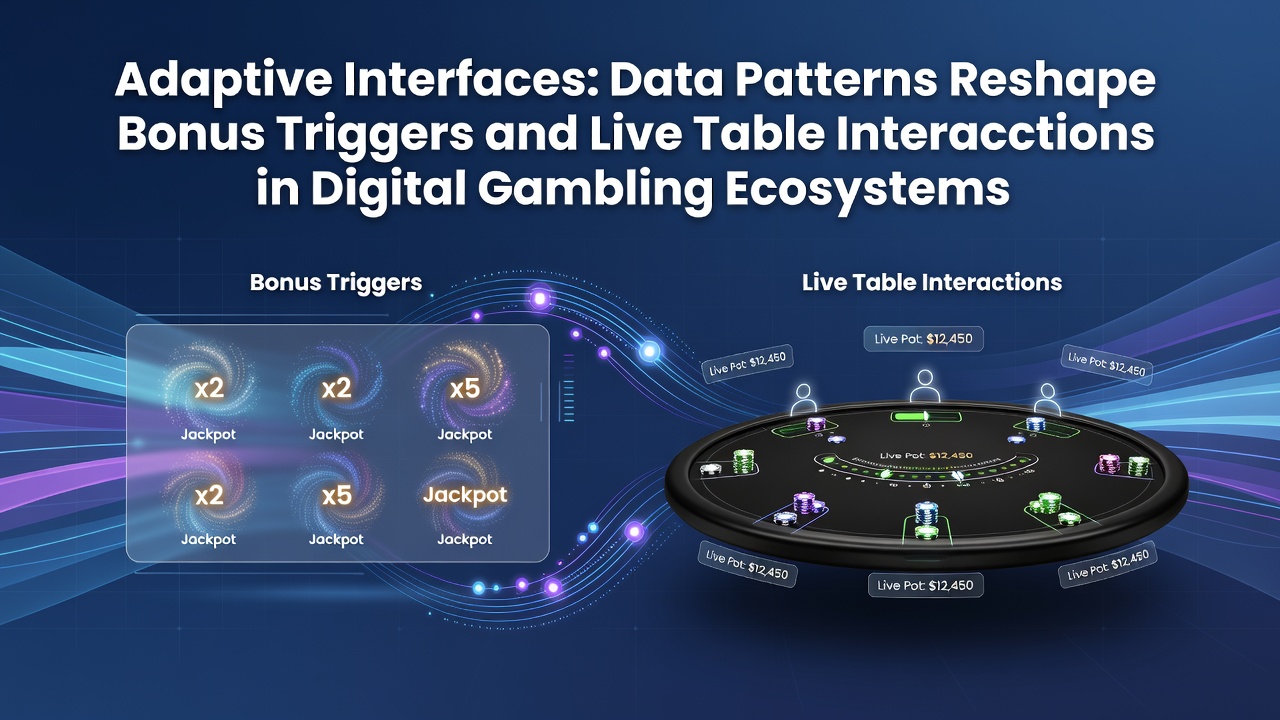
Adaptive Interfaces Transform Bonus Triggers and Live Table Dynamics in Digital Gambling Platforms
Digital gambling platforms now rely on adaptive interfaces that adjust in real time based on player data patterns, and these systems directly influence how bonus triggers activate while reshaping interactions at live tables. Operators collect vast amounts of behavioral information during sessions, and algorithms process this input to modify reward structures on the fly. Research from the University of Nevada's gaming analytics program shows that such personalization increases session duration by aligning offers with individual play rhythms rather than applying fixed rules across all users.
Data patterns emerge from metrics like bet frequency, game selection sequences, and response times to previous promotions. When systems detect clusters of high-engagement activity, bonus triggers shift toward multipliers or free rounds that match the observed style. This approach replaces static campaigns with dynamic ones, and industry reports from the European Gaming and Betting Association confirm that operators using these methods report measurable shifts in player retention rates across multiple jurisdictions.
How Data Patterns Drive Bonus Trigger Adjustments
Bonus mechanics once followed predetermined schedules, yet adaptive interfaces now monitor live data streams to recalibrate them. A player who consistently engages with table games might receive triggers tied to streak-based rewards, while slot-focused users encounter volume-based incentives instead. These adjustments happen through machine learning models that update thresholds continuously, and figures from the Canadian Gaming Association indicate that personalized bonus delivery correlates with higher completion rates for promotional requirements in tested environments.
Take one platform that integrated pattern recognition into its backend systems. The setup analyzed thousands of sessions daily, and when data showed repeated late-night logins paired with smaller bet sizes, the interface lowered the threshold for a cashback trigger without altering the overall prize pool. Observers note that such targeted modifications maintain fairness while responding to actual usage trends rather than broad assumptions.
Live table interactions benefit similarly because adaptive layers overlay dealer feeds and player chat functions with contextual prompts. Data on table occupancy and betting velocity can prompt the system to highlight side bets or adjust camera angles for specific viewers. This creates a feedback loop where interface elements evolve during the session itself, and studies published by the Australian Institute of Gambling Research have documented improved synchronization between player actions and on-screen responses in environments employing these techniques.

Live Table Interactions Under Pattern-Based Systems
Live dealer environments incorporate data streams from multiple sources including hand history, player dwell time, and interaction frequency with chat features. Adaptive interfaces use these inputs to surface relevant information, such as suggested bet ranges or historical outcomes for similar player profiles. The process maintains regulatory separation between random outcomes and personalization layers, while the visible interface elements change to reflect detected patterns.
One documented case involved a multi-table poker network that applied clustering algorithms to seating preferences and aggression metrics. When patterns indicated a group of conservative players at one table, the system adjusted the overlay to emphasize pot odds displays for those participants. This targeted presentation occurred without affecting the underlying game rules or dealer operations, and similar implementations appear in reports from the Nevada Resort Association covering North American deployments.
Integration with broader compliance frameworks continues ahead of July 2026 deadlines in several markets, where platforms must demonstrate that adaptive features preserve transparency and auditability. Data logging requirements expand to cover every interface modification triggered by player patterns, and operators coordinate with technical auditors to verify that changes remain within approved parameters.
Technical Foundations Supporting These Shifts
Real-time processing engines sit at the core of adaptive systems, pulling from databases that store anonymized session histories alongside current activity. These engines apply decision trees and neural network variants to predict which bonus structures or interface tweaks will align with emerging patterns. The resulting outputs feed directly into front-end components, allowing seamless updates during active play without requiring page reloads or session interruptions.
Security protocols encrypt both the raw data and the decision pathways, and external testing bodies validate that no unauthorized manipulation occurs between pattern detection and trigger activation. Industry collaborations with academic partners have produced open frameworks for auditing these flows, which helps standardize practices across different regulatory regions.
Conclusion
Adaptive interfaces continue to evolve through iterative refinement of data pattern analysis, and their influence on bonus triggers alongside live table interactions represents a structural change in how digital gambling ecosystems operate. Platforms that implement these systems track performance through established metrics while adhering to expanding compliance standards, and the approach relies on continuous input from player behavior to maintain relevance. As July 2026 approaches, the focus remains on verifiable transparency in every adaptive decision, ensuring that pattern-driven modifications stay within documented boundaries across global markets.